Professional metal roof repair involves a detailed inspection, targeted repairs to damaged areas, surface preparation, and quality verification. Most projects in Rochester and central New York take one to five days, depending on the extent of the damage, with contractors working to minimize business disruption.
Metal roofing systems protect warehouses, factories, office buildings, and shopping centers throughout the Rochester region. These systems last several decades with proper maintenance, but require attention when leaks, rust, or structural problems develop. At Empire State Commercial Roofing, we specialize in commercial metal roof restoration and repair services across central New York, helping building owners protect their investments through quality workmanship and attention to detail.
Recognizing Metal Roof Damage Indicators
Water leaks, rust formation, loose fasteners, and panel separation indicate your commercial metal roof requires professional attention. Early detection prevents minor issues from escalating into structural damage that demands immediate roof repairs.
- Water infiltration that appears as ceiling stains, interior pooling, or visible drips during rainstorms.
- Rust and corrosion that weaken the roofing integrity and compromise the metal panel strength.
- Loose or missing fasteners that allow water entry and panel movement.
- Damaged flashing around roof penetrations, vents, skylights, and HVAC units.
- Panel separation where seams pull apart due to thermal expansion, wind damage, or improper installation.
- Poor drainage that causes water to remain on the roof for more than two days after rainfall.
Qualified metal roofing contractors near you can address these problems before they worsen.
The Professional Inspection Process
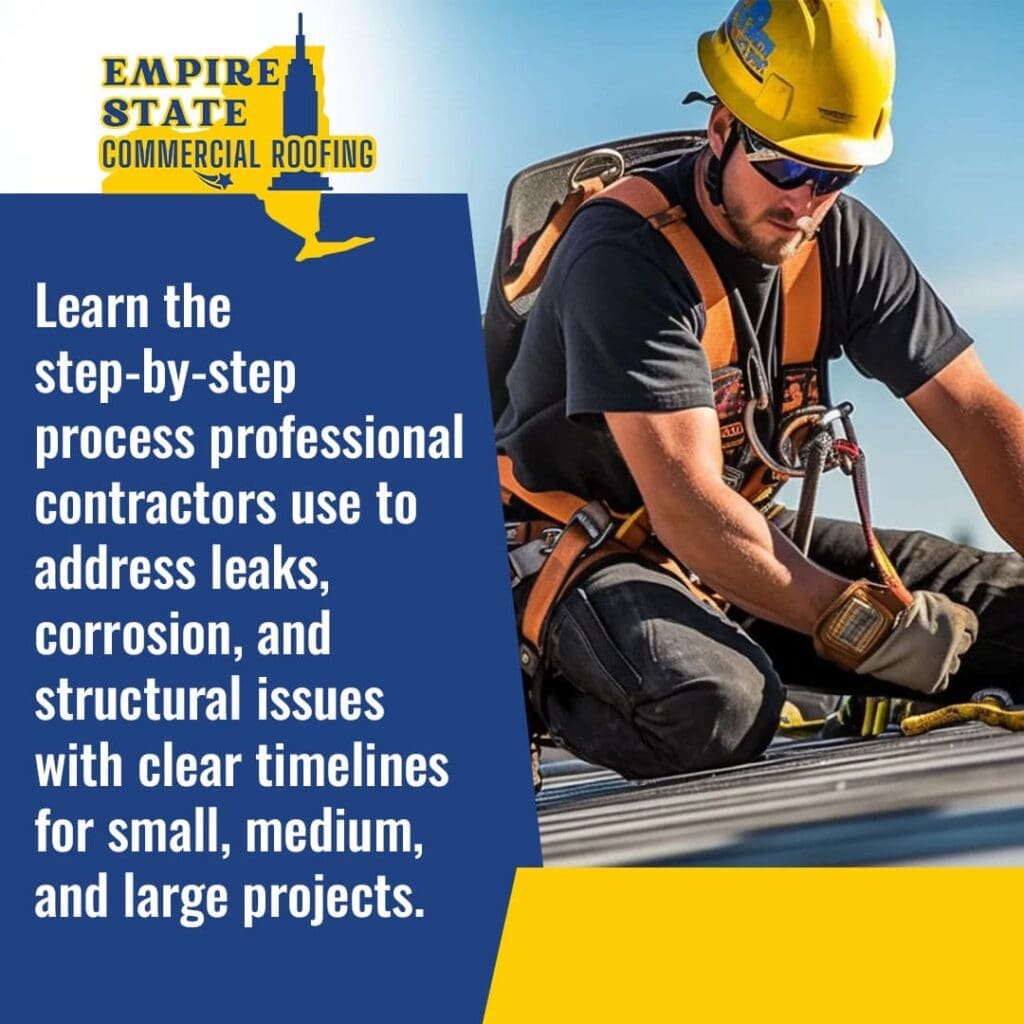
Experienced roofing contractors conduct detailed roof examinations, documenting problem areas and identifying underlying issues invisible from ground level. Inspections typically take two to four hours, depending on building size and complexity.
- Examination of all fasteners for loose screws, missing washers, or areas where fasteners have pulled through panels.
- Inspection of seams where panels overlap, testing sealant integrity, and identifying separation allowing water entry.
- Assessment of rust, corrosion, and coating deterioration to determine if surface rust responds to treatment or if corroded sections need panel replacement.
- Structural evaluation to identify roof deck or support system damage from water infiltration.
- Interior facility inspection looking for water stains, mold, or moisture intrusion evidence.
- Thermal imaging technology to detect hidden moisture trapped in insulation or roof assemblies.
- Detailed reports with photographs, recommended repair scope, and project estimates explaining immediate repairs versus preventive maintenance.
Professional metal roofers explain which repairs address immediate leaks versus preventive maintenance, extending the lifespan of the roof. The National Roofing Contractors Association recommends roof inspections twice annually to identify seasonal wear patterns and address problems before they worsen.
Understanding Repair Project Timelines
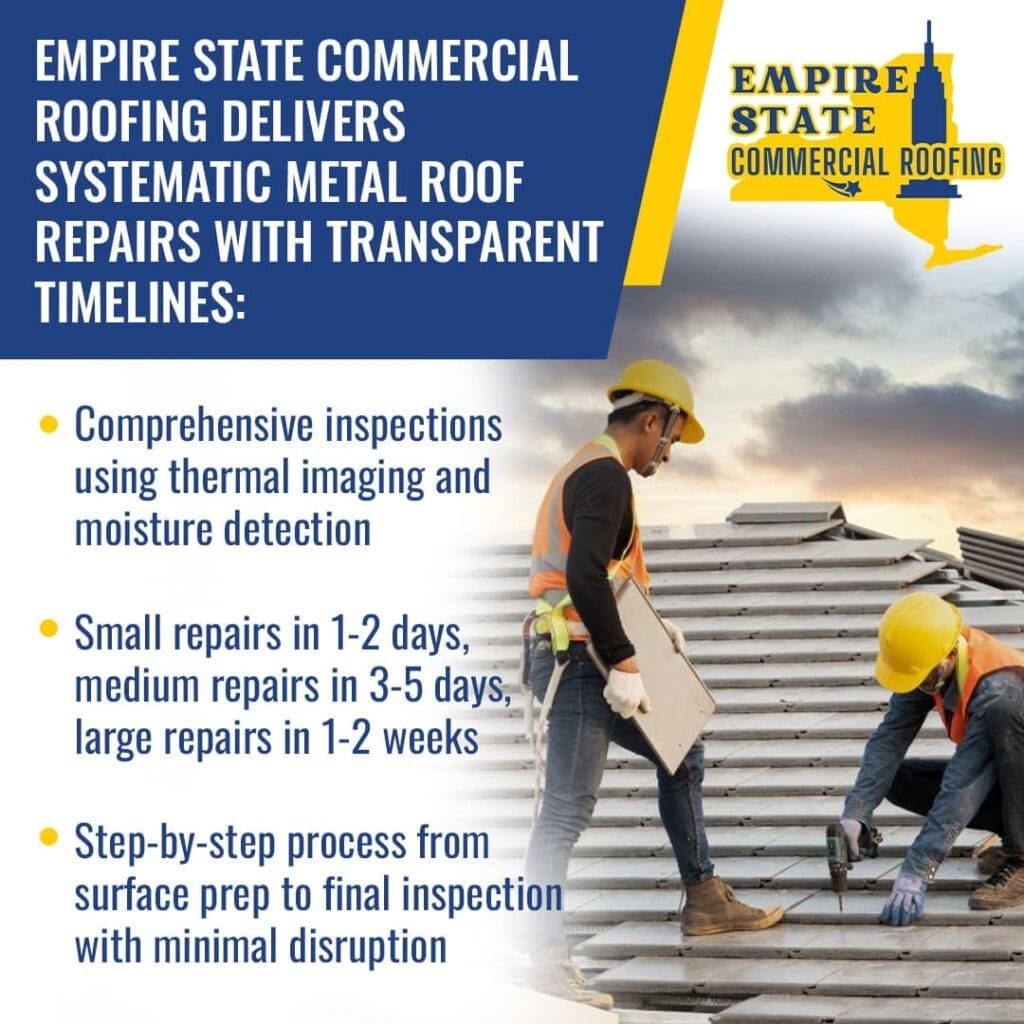
Small repairs take one to two days, medium-scale projects require three to five days, and extensive repairs span one to two weeks. Timeline variations depend on damage extent, roof size, weather conditions, and material availability.
Minor Repair Projects
Minor repairs addressing isolated leaks or loose fasteners can be completed quickly with minimal disruption. These projects can be scheduled during off-hours or weekends to avoid impacting business operations. Examples include resealing small seam sections, replacing damaged fasteners, or treating limited rust areas. When you need urgent roof repairs near you, experienced contractors can mobilize quickly for emergency response.
Medium-Scale Repair Projects
Medium-scale repairs covering multiple problem areas or requiring panel replacement need additional time. Projects of this size may involve replacing damaged sections, resealing numerous seams, treating rust, and applying protective coatings. Contractors coordinate timing to complete work efficiently while minimizing facility activity interference.
Extensive Repair Projects
Extensive repairs involving panel replacement, structural corrections, or widespread coating application take longer. Weather conditions in Rochester and central New York affect scheduling. Most metal roof repair requires dry conditions. Winter repairs may extend due to shorter daylight hours and temperature limitations for certain materials.
Roof size and accessibility impact duration. Large warehouse or manufacturing facility roofs require more time than smaller office buildings. Complex designs with numerous penetrations, multiple levels, or difficult access slow progress compared to simple layouts.
Material availability sometimes extends timelines when repairs require specific panel profiles, gauges, or colors matching existing roofing. Quality metal roofing contractors near you order materials in advance and maintain supplier relationships to minimize delays.
Step-by-Step Repair Process
The repair process follows systematic steps: surface preparation, fastener replacement, seam repair, panel replacement, rust treatment, flashing repair, coating application, and quality inspection. Each step addresses specific problems and prevents recurrence.
Surface Preparation and Cleaning
Repairs begin with a thorough cleaning of the work area. Contractors remove dirt, debris, algae, and rust from metal surfaces using pressure washing or cleaning solutions. This cleaning step helps new sealants and coatings stick properly to the roof surface. Professional metal roofers know that proper cleaning directly affects how long repairs will last.
Fastener Replacement and Tightening
Loose or damaged screws are replaced with new fasteners that have rubber washers to create watertight seals. Contractors tighten each screw to the right tension. Too tight can dent the panels, while too loose allows water to seep in. Missing screws are added where needed.
Seam Repair and Resealing
Separated seams are re-fastened or sealed with specialized products designed for metal roofing. Some seam types need to be re-crimped (pressed back together), while others need butyl tape or high-grade sealant at panel overlaps to prevent water entry. These seam repairs create lasting waterproof protection.
Panel Replacement
Severely damaged panels that can’t be repaired are replaced with matching materials. Contractors carefully remove damaged sections without disturbing surrounding panels. New panels are installed with proper overlap and sealing to blend seamlessly with your existing roof. Color matching may require custom ordering to match weathered panels.
Rust Treatment and Prevention
Rust-affected areas are cleaned to remove loose corrosion, then treated with rust-stopping products. After treatment, contractors apply primer and finish coatings that match your roof color while providing UV and weather protection. This process improves appearance and stops rust from spreading. Qualified commercial roof repair contractors understand how to properly treat and prevent rust.
Flashing Repair and Replacement
Damaged flashing (metal pieces that seal roof edges and openings) around penetrations, edges, and transitions is repaired or replaced. Proper flashing installation requires precise fitting, secure attachment, and thorough sealing to create reliable weatherproof barriers. Contractors pay close attention to these areas since flashing problems cause many roof leaks.
Coating Application
Protective roof coatings may be applied over repaired areas or entire roof surfaces, depending on your project needs. These coatings provide waterproofing, reflect heat to improve energy efficiency, and extend roof life. Multiple coats are applied with proper drying time between each layer, typically ranging from several hours to a full day.
Quality Control Inspection
After completing repairs, contractors conduct final inspections to verify all work meets specifications. They test repaired areas to make sure water drains properly, check that fasteners are secure, and confirm coatings have dried correctly. This quality control step catches any issues before finishing the project.
Safety Protocols During Repair Work
Commercial roof repair contractors implement fall protection systems, work zone barricades, equipment safety procedures, weather monitoring, and fire prevention measures, protecting workers and building occupants. OSHA requires specific safety measures for commercial roofing projects.
Worker and Property Protection
- Fall Protection: Guardrails, safety nets, or harness systems for all work performed more than six feet above ground level.
- Work Zone Barricades: Roped-off ground-level areas where materials or debris might fall, preventing injury to employees, customers, or visitors.
- Equipment Safety: Only trained, certified personnel operate lifts, cranes, and machinery with daily inspections before use.
- Weather Monitoring: Work halts during high winds, thunderstorms, or icy conditions to protect workers and prevent damage to partially completed repairs.
- Material Handling: Proper lifting techniques and secure storage of materials, particularly metal panels that can act as sails in windy conditions.
- Fire Prevention: Fire extinguishers nearby, cleared combustible materials, and monitoring for hot spots when using torches or heat guns.
These safety measures protect both the roofing crew and your employees, customers, and property throughout the repair project. Quality metal roofing contractors near you implement comprehensive safety programs and follow OSHA requirements, reducing risks to workers and your business operations.
Minimizing Business Disruption
Contractors minimize disruption through flexible scheduling, phased work plans, noise management, dust containment, access coordination, and proactive communication. Professional roofing companies understand commercial buildings remain operational during repairs.
Flexible Scheduling
Flexible scheduling accommodates business needs. Contractors can perform non-urgent repairs during off-hours, weekends, or slow periods when fewer people occupy buildings. Emergency leak repairs may require immediate attention, but contractors work efficiently, completing them quickly. This flexibility helps businesses maintain normal operations while addressing roofing problems.
Phased Work Plans
Phased work plans allow large repair projects to proceed in sections rather than shutting down entire roofs at once. Contractors complete one area before moving to the next, limiting space where noise, debris, or access restrictions affect building use. This approach works particularly well for facilities with sensitive operations or those unable to close during repairs.
Noise Management
Noise management techniques reduce disruption from construction sounds. Contractors can schedule loud activities during specific times, notify building occupants in advance, and use quieter equipment when possible. Work performed on roofs produces less noise inside buildings than interior construction, but advance communication helps occupants prepare for temporary disturbances.
Dust and Debris Containment
Dust and debris containment prevents material from entering facilities. Contractors use tarps, barriers, and other protective measures to catch falling debris. They stage dumpsters and material storage areas conveniently for crews while keeping them away from main entrances and high-traffic zones. Proper containment maintains a professional appearance and prevents cleanup issues.
Access Coordination
Access coordination ensures that delivery trucks, equipment, and contractor vehicles don’t block customer parking or obstruct loading docks. Commercial roof repair contractors plan material deliveries during agreed-upon times and park vehicles in designated areas, not interfering with operations. This consideration helps businesses maintain normal functions throughout repair projects.
Communication and Updates
Communication keeps building occupants informed about project activities. Contractors provide advance notice about schedule changes, anticipated noise periods, or temporary restrictions affecting building access. Regular updates help teams plan around construction activities.
Post-Repair Inspection and Verification
Final inspections verify all work meets industry standards through visual examination, water testing, fastener checks, flashing inspection, drainage assessment, and documentation. This quality control process protects your investment and confirms repairs were performed as intended.
After completing repairs, metal roofers conduct thorough inspections, checking that panels are properly aligned, fasteners are correctly installed, seams are sealed to manufacturer specifications, and coatings have uniform coverage. Water testing simulates rainfall over repaired areas to verify leaks have been eliminated before contractors leave your property. Inspectors also verify that flashing is properly installed, drainage systems function correctly, and all fasteners create weathertight seals.
Documentation captures inspection findings through photographs and written reports. This documentation provides records of completed work and can be valuable for future reference, warranty claims, or property transactions. Detailed records help you track roof condition over time and plan for future maintenance needs.
Empire State Commercial Roofing’s Approach to Commercial Roof Repair
At Empire State Commercial Roofing, we take a systematic approach to metal roof repair that prioritizes quality workmanship, minimal business disruption, and long-term performance. Our process is designed to address your immediate roofing problems while preventing future issues.
Service Standards
- Thorough Inspections: We begin every project with detailed inspections to understand the full extent of damage and underlying causes, not just visible problems.
- Root Cause Solutions: Our team identifies why issues occurred and addresses root causes to prevent recurring leaks.
- Repair and Restoration Services: We handle everything from targeted repairs addressing specific problem areas to complete roof restoration without tear-off, saving up to 50% compared to full replacement.
- Leak-Free Warranties: All our work is backed by leak-free warranties for your peace of mind.
- Annual Maintenance Plans: Regular inspections and preventive care help you stay ahead of problems.
- Minimal Disruption: We work efficiently and coordinate timing to minimize impact on your business operations.
Our Experience
Serving Rochester and communities throughout central New York since 2012, Empire State Commercial Roofing has built our reputation on timely service, attention to detail, and commitment to customer satisfaction. Building owners, facility supervisors, and maintenance managers trust us to protect their properties with quality metal roofing repair and restoration services.
Schedule Your Commercial Metal Roof Repair in Rochester
Commercial metal roof repair protects Rochester buildings from water damage, extends roof lifespan, and maintains facility integrity. Working with experienced metal roofing contractors near you who understand commercial metal systems makes sure repairs are completed correctly using quality materials and proper techniques.
Empire State Commercial Roofing serves building owners, facility supervisors, and maintenance managers throughout Rochester and central New York with metal roof repair service. We specialize in restoring existing roofs without tear-off while delivering results extending roof service life by decades.
Don’t wait for small roof repairs to become expensive emergencies. Call Empire State Commercial Roofing at (315) 857-6988 to schedule a metal roof inspection or discuss repair needs for your Rochester commercial property.