A completed commercial roof inspection report lands on your desk with findings, photographs, and repair recommendations. For many building owners, receiving that report feels like the job is done. It is not. The inspection captures a single moment in your roof’s condition. What you do with that information over the following days, weeks, and seasons is what actually protects the building.
At Empire State Commercial Roofing, we have worked with commercial property owners, facility managers, and maintenance supervisors across central New York since 2012. This guide walks through the practical steps to take after a professional commercial roof inspection is complete, from reading the report correctly to building a maintenance routine that holds up through Rochester’s demanding weather.
Understanding What Your Inspection Report Is Telling You
A professional inspection report is a prioritized document, not just a list of problems. Learning to read it correctly shapes every decision that follows.
The Three Categories of Findings
Most reports from a qualified commercial roof inspection service organize findings into three tiers based on urgency.
- Immediate concerns are conditions that need contractor contact within days. Active water intrusion, visible deck deflection (sagging or bowing of the structural roof deck), displaced membrane sections, and blocked primary drains during a wet period all belong here. When left unaddressed, these conditions spread quickly and pull other roof components into the damage zone.
- Near-term repairs are findings that will worsen within one to two seasons. Cracked or dried sealant around penetrations, minor seam separation, and early flashing failure fall into this tier. These items are manageable now, but become immediate concerns if they carry through another Rochester winter.
- Monitoring items are early-stage conditions documented so future inspections can track whether they are stable or progressing. These findings serve a planning function rather than a repair function.
Acting on Each Tier Differently
Immediate concerns require a scheduled repair before the next significant weather event. Near-term repairs belong in the current fiscal year’s maintenance budget. Monitoring items require dated photographs and notes at each monthly walkthrough so changes can be compared over time.
Treating all findings with the same urgency wastes resources. Treating them all as low priority creates the conditions for emergency repairs that disrupt building operations.
What to Do in the First 30 Days After an Inspection
The first month after a commercial roof inspection is the most consequential. Decisions made during this window set the pace for everything that follows.
Contact Your Contractor About Immediate Findings
Call your commercial roofing contractor to discuss immediate concerns before scheduling anything else. Share the full inspection report, not just a summary. A contractor reviewing the complete document can identify whether findings are connected, which affects repair sequencing and scope.
For example, failed flashing around a rooftop HVAC unit and a water stain on the ceiling two rooms away may appear unrelated in the report but share a single cause. A contractor reviewing both findings together catches this; a contractor responding to one work order at a time may not.
Use the Inspection Report as Your Baseline
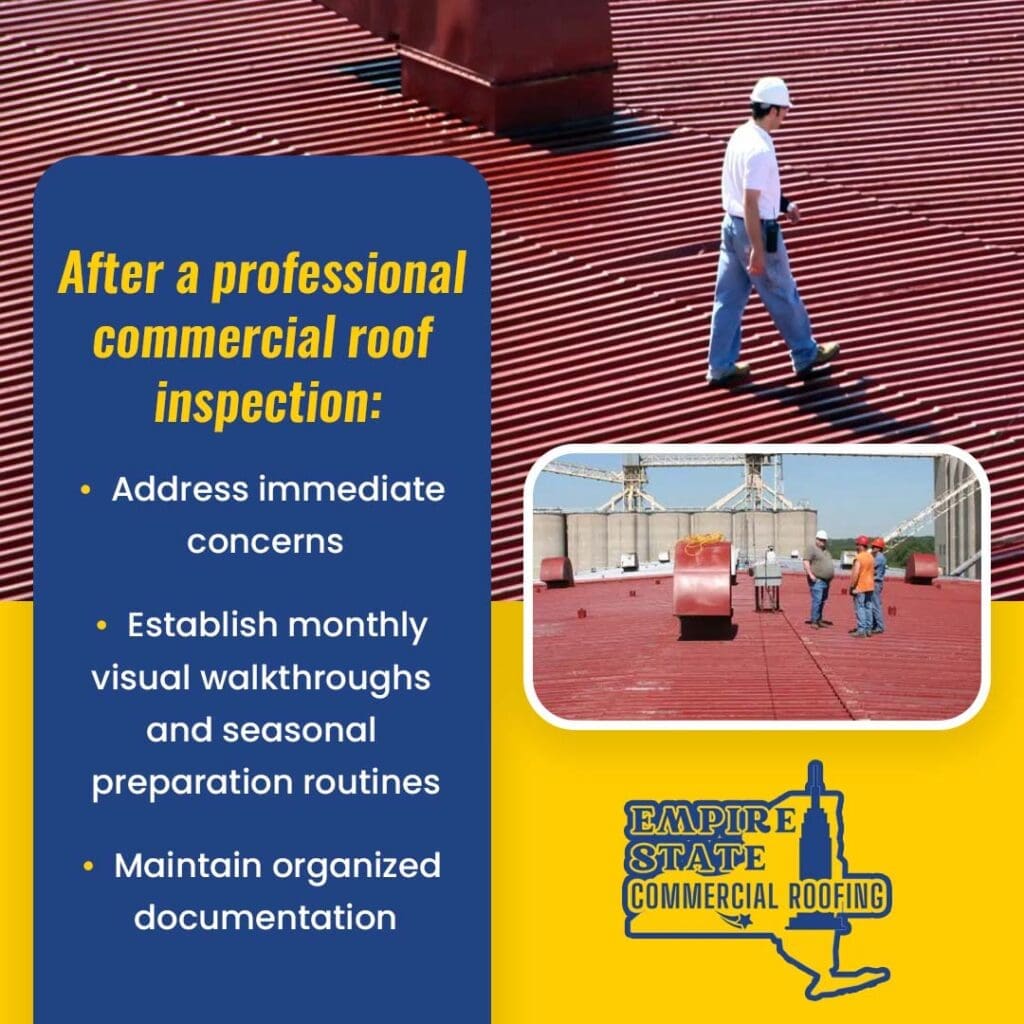
The photographs and condition notes in your inspection report serve as the starting reference point for all future monitoring. During monthly walkthroughs, compare what you observe against those documented conditions. Any new staining, moisture, or surface changes that were not present at the time of inspection warrant a call to your commercial roofing contractor before the next scheduled visit.
Notify Your Insurance Provider if Storm Damage Is Involved
If the inspection followed a significant weather event, contact your insurance provider promptly. Commercial property policies generally require that the insured take reasonable steps to prevent further damage after a covered loss. Sharing the inspection report with your adjuster early satisfies this requirement and starts the claims timeline.
Post-storm inspections document the cause and extent of damage while the connection to the weather event is still clear. Waiting weeks or months creates ambiguity that adjusters can use to question whether damage predates the storm.
Setting Up an Ongoing Commercial Roof Maintenance Routine
A single inspection addresses current conditions. A structured commercial roof maintenance routine prevents those conditions from developing again.
Monthly Visual Checks
Monthly walkthroughs take under 30 minutes and do not require roof access. They focus on three areas:
- Interior indicators: Ceiling discoloration, soft or bubbling drywall, and musty odors in spaces directly below the roof. These signs appear before a leak becomes visible and give property owners time to respond before damage spreads.
- Drainage performance: Best assessed during or just after rainfall. Water pooling on the roof surface for more than 48 hours after a storm indicates a blocked or undersized drain. Standing water accelerates membrane deterioration and adds structural load to the deck.
- Rooftop equipment condition: HVAC units, exhaust fans, and antenna mounts vibrate continuously during operation. That vibration loosens fasteners and wears the surrounding membrane over time. Checking for displaced equipment mounts or visible wear patterns around mechanical units catches a common and preventable leak source.
Seasonal Preparation Specific to Rochester
According to the National Weather Service, Rochester, NY, averages over 99 inches of snowfall annually. That makes seasonal preparation non-negotiable for commercial properties in the region.
Before winter:
- Clear all drains, gutters, and scuppers. Verify that sealant around all penetrations is intact and flexible.
- Inspect flashing at parapet walls and roof edges, where ice dam pressure concentrates during freeze-thaw cycles. Ice dams form when heat loss through the roof melts snow, which refreezes at the cooler roof edge. The resulting ice forces meltwater backward under membrane edges into areas not designed to handle standing water.
Before summer:
- Assess how the roof came through winter. Look for membrane shrinkage, which appears as tightening or pulling at seams and edges.
- Check fastener integrity on metal roof systems. UV exposure through summer accelerates surface degradation on membranes already stressed from thermal cycling.
Staying consistent with these checks between scheduled visits helps commercial roofing contractors in Rochester identify changes faster, make more accurate repair recommendations, and address developing issues before they affect the building’s interior.
Managing Warranty and Insurance Documentation
Two forms of documentation determine whether a property owner can recover losses when roof damage occurs: warranty records and maintenance history.
Keeping Your Warranty Valid
Most commercial roofing system warranties include maintenance conditions. These vary by manufacturer but commonly require professional inspections at specified intervals, repairs performed by certified contractors, and documentation submitted to the manufacturer at defined points in the warranty period.
Missing a required inspection or using a non-approved contractor for repairs gives manufacturers grounds to deny warranty claims. Review the specific terms of your roofing system warranty and confirm what your commercial roof inspection services provider is required to deliver in writing after each visit.
Building a Maintenance File
A maintenance file organized by date and containing the following is sufficient:
- Professional inspection reports
- Repair invoices with scope descriptions
- Photographs from monthly walkthroughs
- Any correspondence with your insurance provider
- Warranty documents with manufacturer contact information
This file serves multiple purposes. It demonstrates proactive upkeep to an insurance adjuster reviewing a claim. It satisfies documentation requirements for warranty compliance. It provides a condition history that informs future repair and replacement decisions. During a property sale, it gives buyers verifiable evidence of how the roof has been maintained.
Restoration vs. Replacement: Reading the Long-Term Signal
Some inspection reports do more than identify current repairs. They signal where a roof is heading over the next several years. Knowing how to read that signal helps property owners make informed decisions before conditions force a rushed one.
When Restoration Is the Practical Path
Restoration is appropriate when the structural deck is sound, insulation damage is localized, and the existing membrane system still has usable life. Metal roof restoration applies fluid-applied coatings over existing metal panels, sealing current deficiencies and protecting against future ones without requiring tear-off. Spray foam roofing, or spray polyurethane foam (SPF), applies directly over existing roof surfaces, adds insulation value, and creates a seamless surface with no seams or fastener points.
Both approaches extend roof service life and keep the building operational throughout the process. An inspection report showing localized damage on an otherwise intact roof is typically a strong indicator that restoration is viable.
When Replacement Becomes Necessary
Widespread insulation saturation, significant deck deterioration, or multiple failed membrane sections across a large area indicate that restoration may not address the underlying condition adequately. An experienced contractor reviewing the full inspection report can advise on whether the repair addresses the root problem or only delays an inevitable replacement.
The goal is to make this decision based on documented condition data, not on assumptions about roof age. Age alone does not determine a roof’s remaining service life. Condition does.
Why Working With Local Commercial Roofers Near You Matters
Roof maintenance is not a one-size-fits-all process. The right approach depends on the roofing system type, the building’s history, and the local climate conditions the roof faces year after year.
Working with commercial roofers near you means your contractor already understands the regional weather patterns affecting your building. In central New York, that means familiarity with freeze-thaw membrane stress, ice dam formation at roof edges, and the specific ways EPDM (ethylene propylene diene monomer) and TPO (thermoplastic polyolefin) systems perform through Rochester winters.
Local contractors also provide faster response when findings from an inspection require prompt repair. A commercial roofing contractor unfamiliar with the region may underestimate urgency timelines or recommend materials better suited to milder climates.
Commercial Roof Inspection Services From Empire State Commercial Roofing
Empire State Commercial Roofing has served commercial properties across central New York since 2012. Our team works with building owners, facility supervisors, and maintenance managers to deliver professional commercial roof inspection services that go beyond a checklist.
What Our Inspections Cover
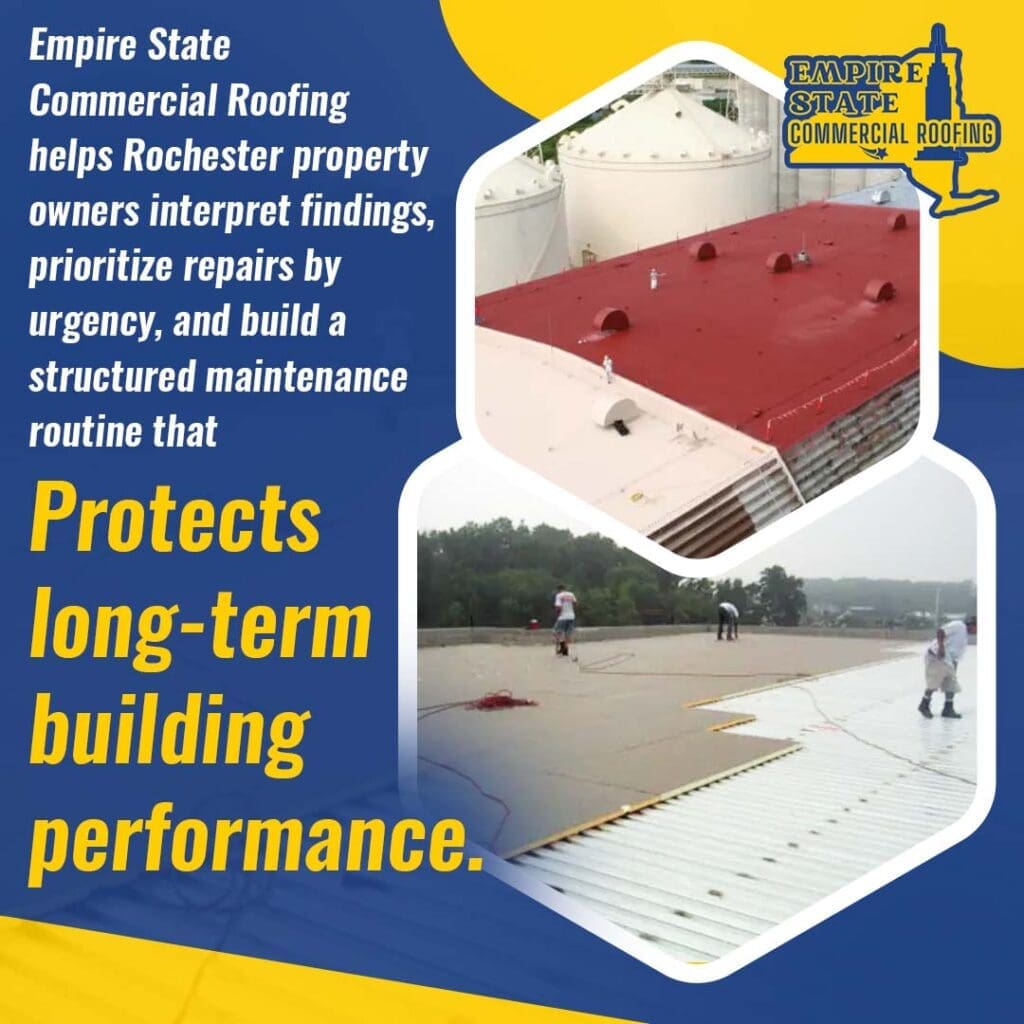
Every inspection produces a detailed, prioritized written report with photographs and clear repair recommendations. Our process examines the full roofing system, including membrane condition, flashing integrity, drainage performance, penetration sealants, and rooftop equipment wear. Findings are organized by urgency so property owners know exactly what needs immediate attention and what can be monitored over time.
Our Maintenance Programs
As experienced commercial roofers near you, Empire State Commercial Roofing offers annual commercial roof maintenance programs designed to take the administrative burden off facility managers. Our plans include scheduled inspections, priority repair response, and leak-free warranties. Every visit produces written documentation that satisfies insurer and warranty requirements.
We are a certified Conklin roofing contractor, which means our inspection and repair documentation meet Conklin warranty requirements. We serve commercial properties in Rochester, Syracuse, Canandaigua, Geneva, Henrietta, and Painted Post.
Schedule Your Commercial Roof Inspection in Rochester Today
Call Empire State Commercial Roofing at (315) 857-6988 to discuss your inspection findings, schedule follow-up repairs, or learn more about our commercial roof inspection services and annual maintenance programs. We are ready to help you keep your building protected through every season central New York delivers.